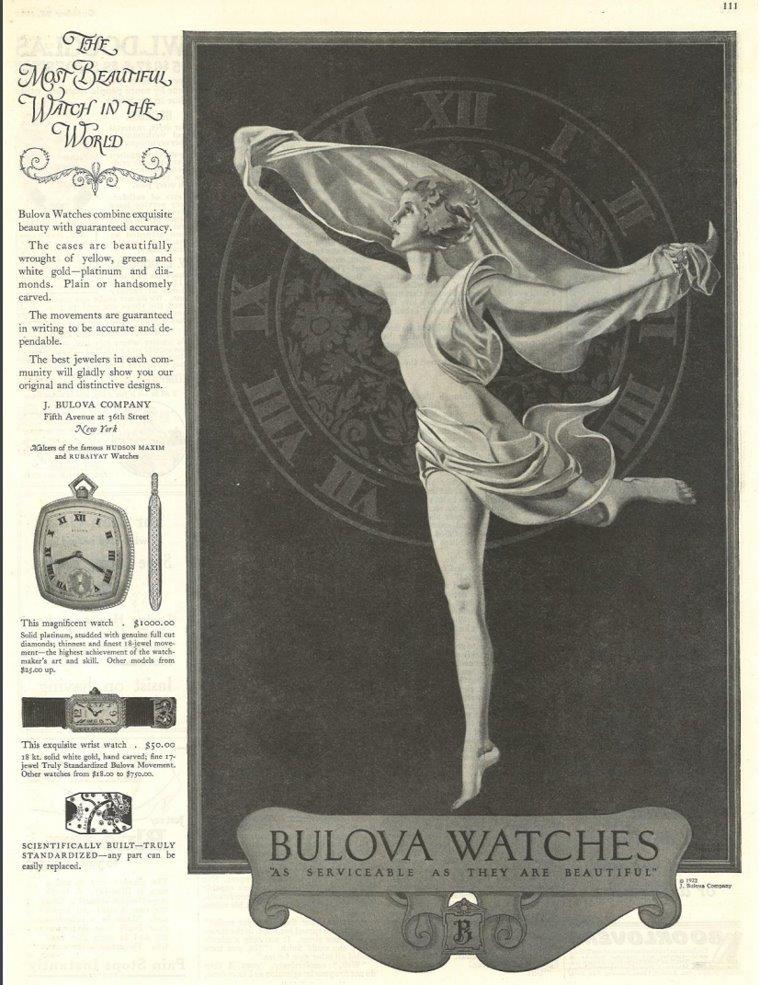
Bulova Archive · National Convention · Carl E. Rosen, Historian
Legendary Since 1875
Saturday Evening Post · 1922 · "The Most Beautiful Watch in the World"
Joseph Bulova worked for Tiffany & Co. for five years in the 1870s before launching his own vision for American watchmaking. The Tiffany connection would resurface — dramatically — decades later.
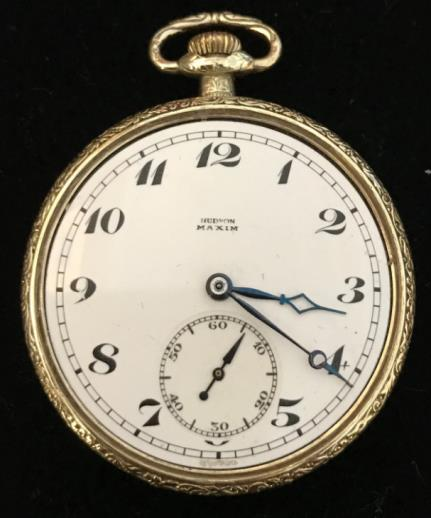
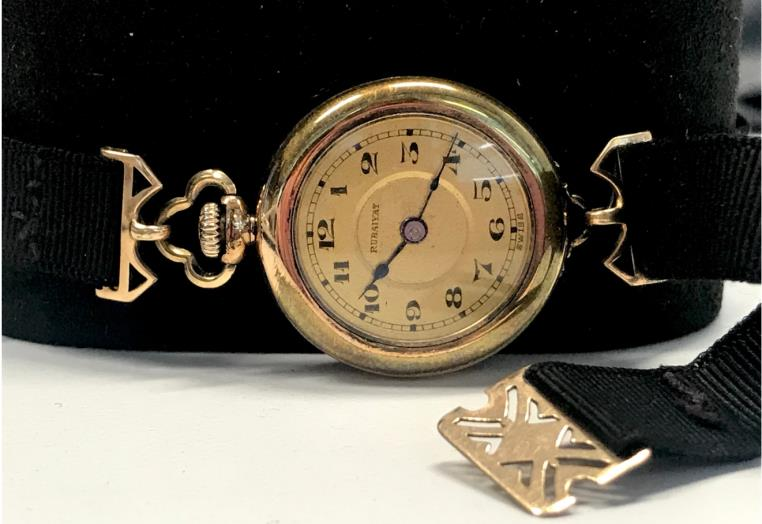
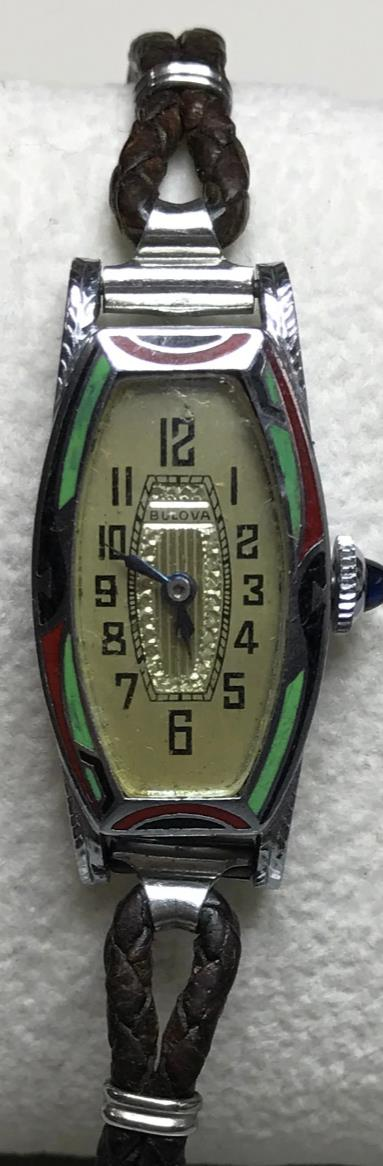
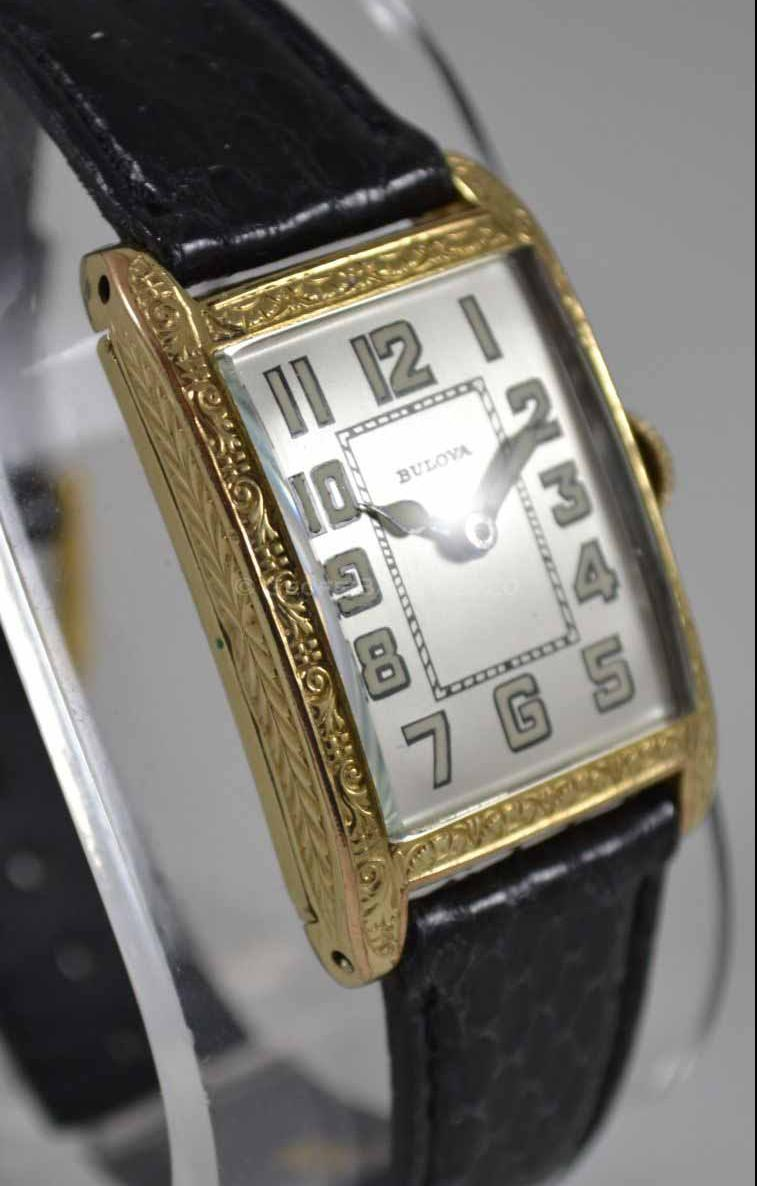
Early Bulova Timepieces · Hudson Maxim · Rubaiyat · Art Deco Collection
Joseph Bulova received a U.S. patent for an improved bicycle crank — evidence of his relentless drive for mechanical innovation before watches became his legacy.
The earliest Bulova timepieces bore no brand name on the dial. They sold under names like Hudson Maxim, Lady Maxim, Rubaiyat, American Maid, and Lord Springfield.
Bulova produced the world's thinnest watch — the Phantom — and commissioned the iconic Goddess of Time sculpture the same year.
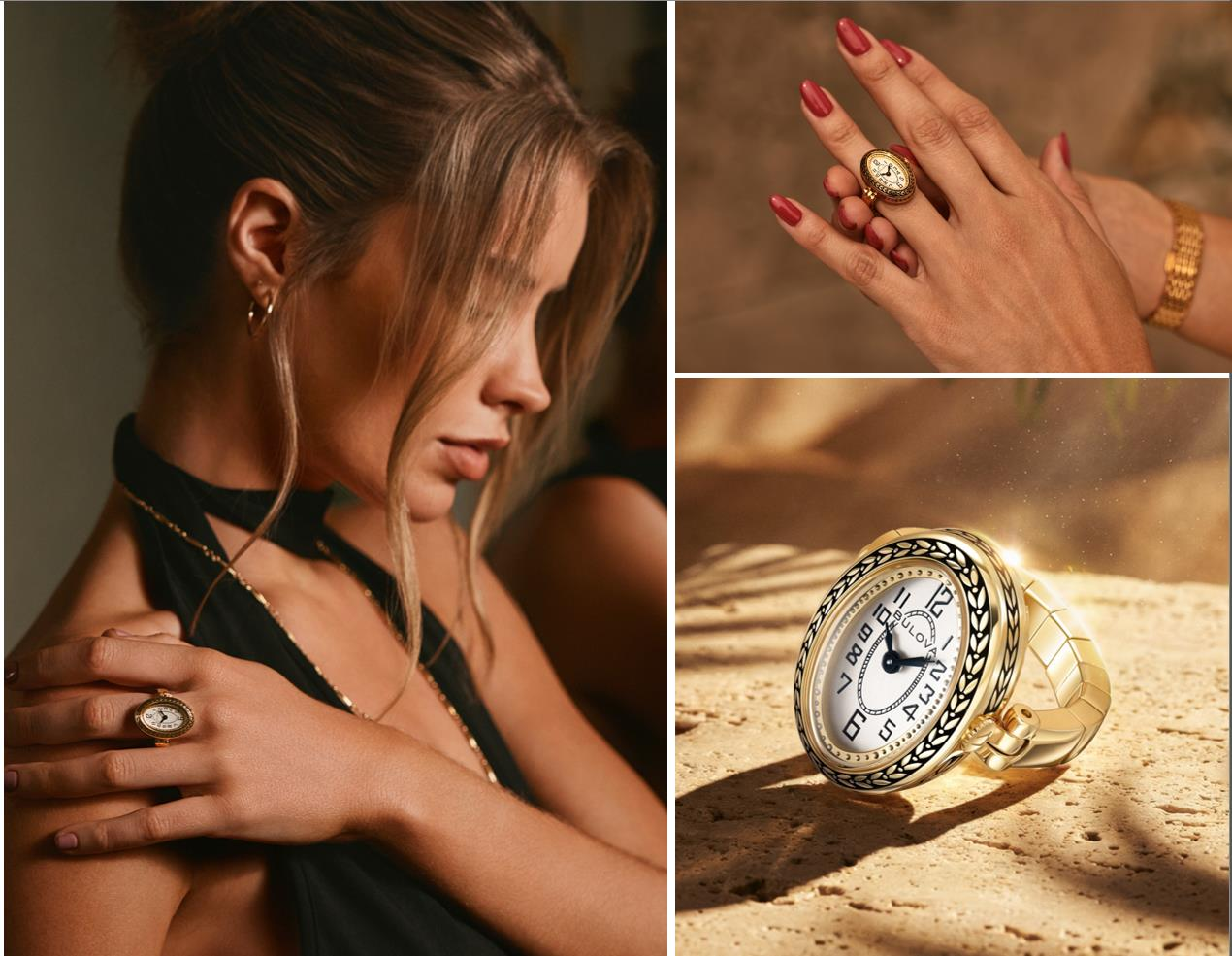
Bulova crafted delicate ring watches in the 1920s — and revisited the design a full century later. Some ideas are simply timeless.
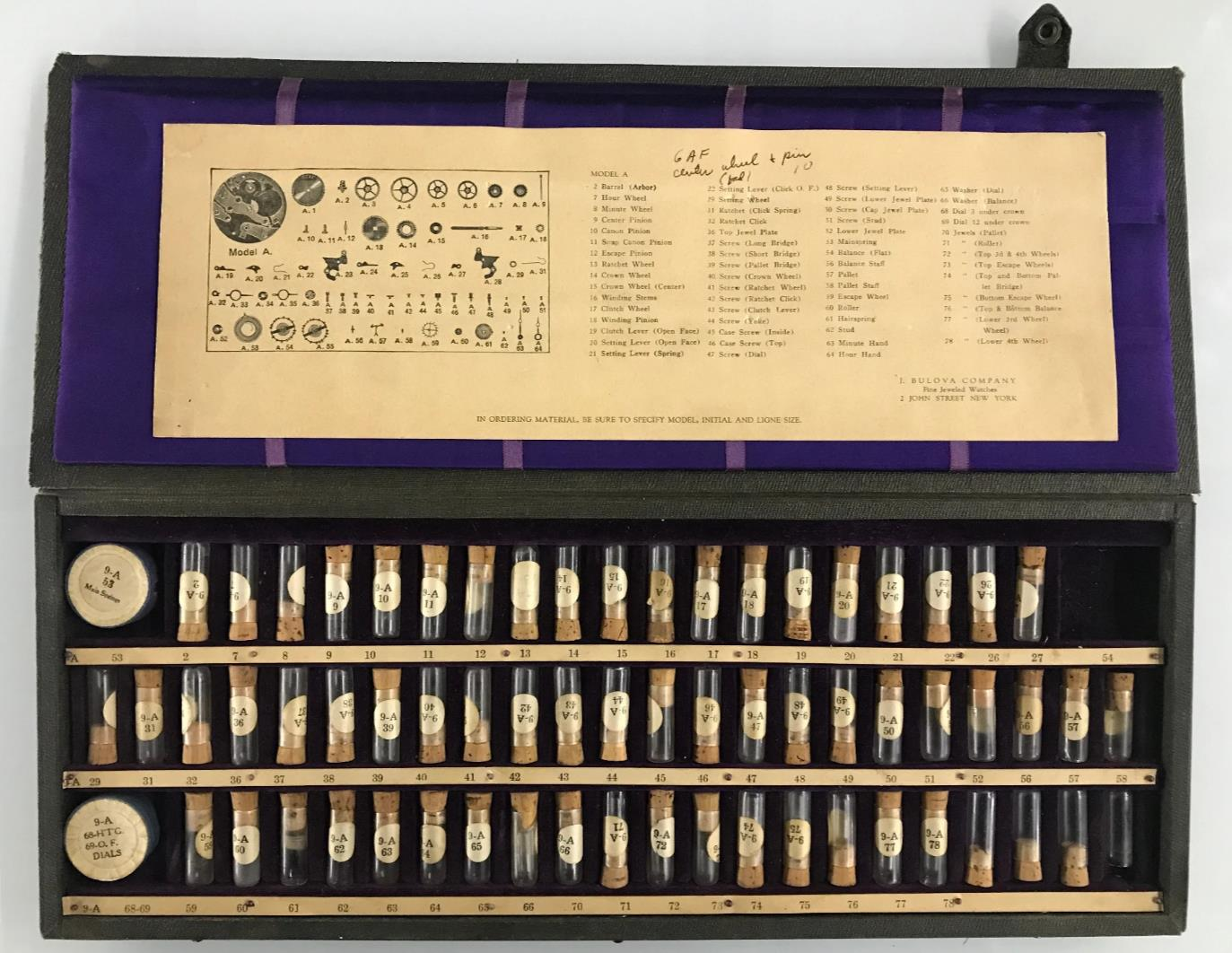
Joseph Bulova is often called the Henry Ford of watchmaking — insisting on the standardization of parts for interchangeability, transforming how watches were manufactured in America.
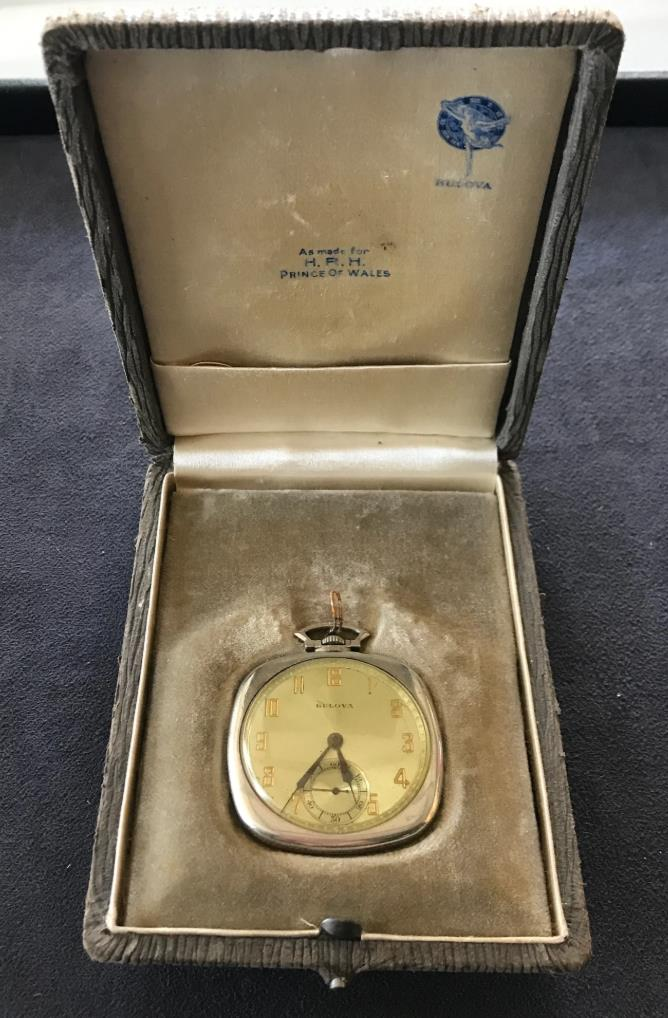
Bulova released a special pocket watch in honor of the Prince of Wales' visit to the United States.
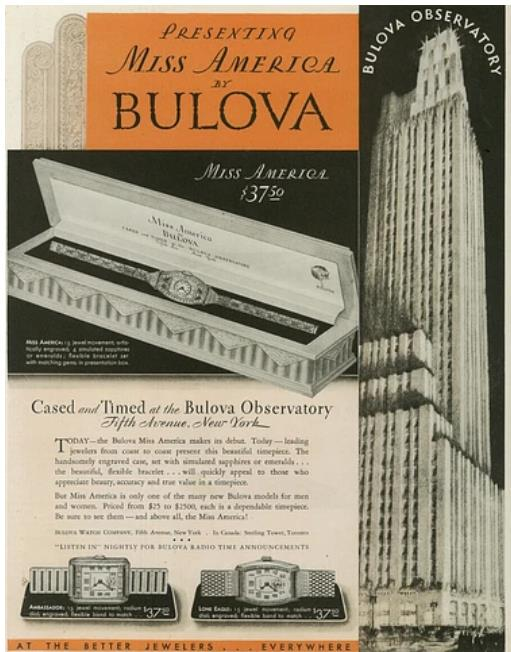
Bulova produced the smallest watch in the world — less than a dime in size, crafted in solid platinum, sold for $1,000 — and presented to Queen Marie of Roumania.
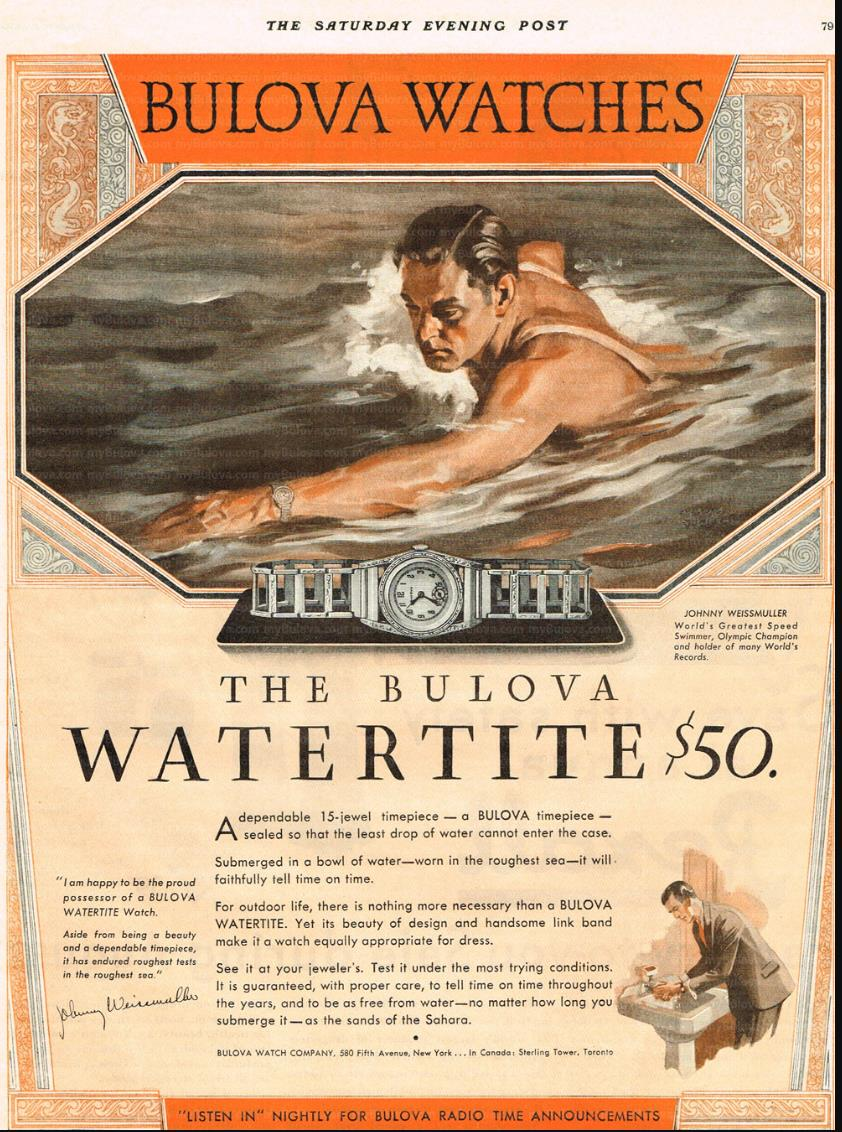
The Saturday Evening Post · 1930 · Featuring Olympic Champion Johnny Weissmuller
In 1930, Bulova launched the Watertite — introducing water-resistant precision to the world, with Johnny Weissmuller as its face.
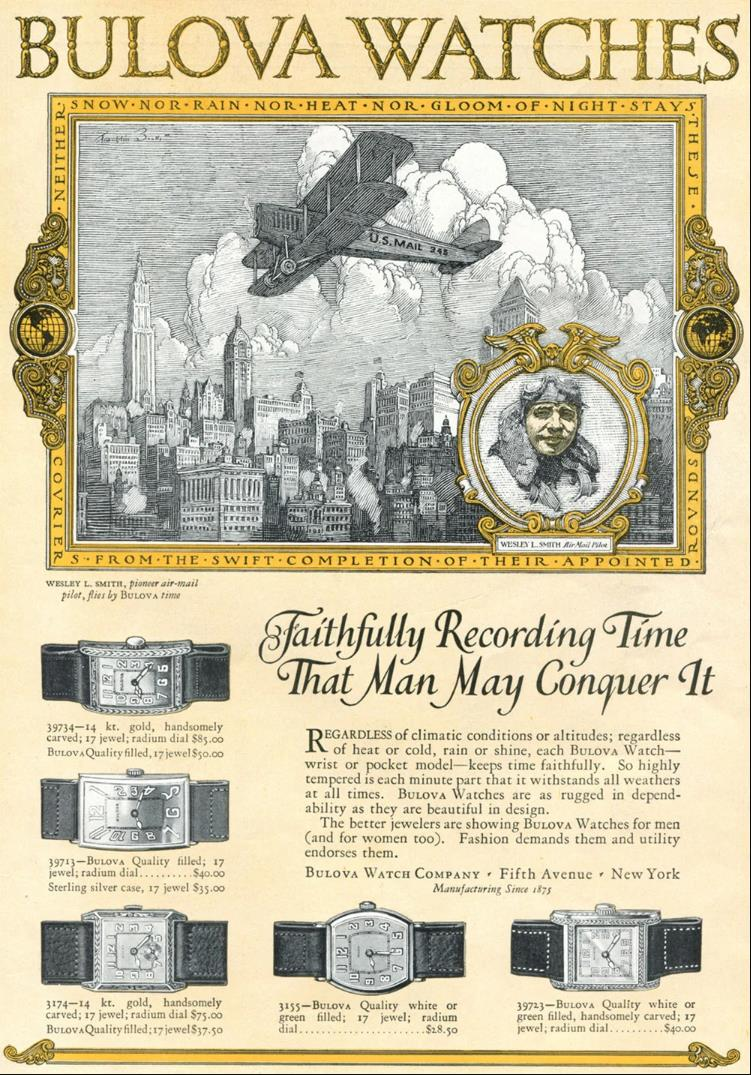
Aquatic Innovation · 1930Saturday Evening Post · 1925 · Wesley L. Smith, Pioneer Air-Mail Pilot
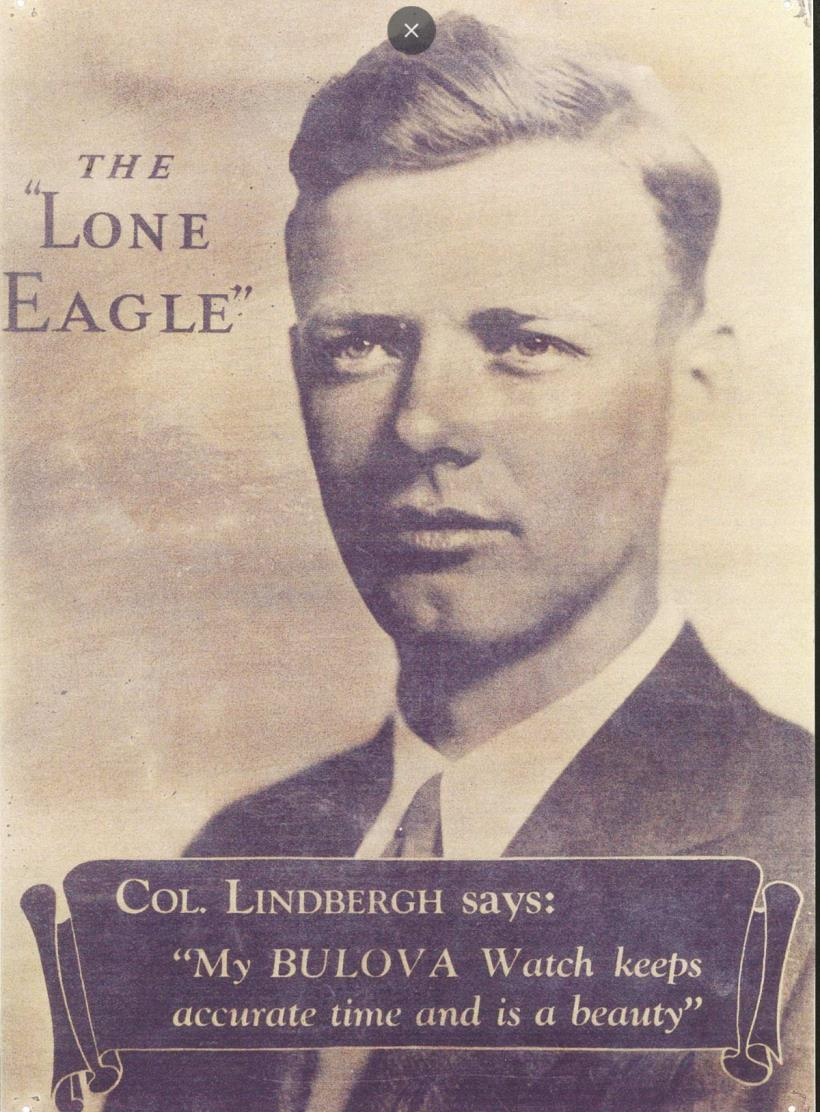
After Lindbergh's solo transatlantic triumph, Bulova created the Lone Eagle watch. The Colonel himself declared: "My Bulova Watch keeps accurate time and is a beauty."
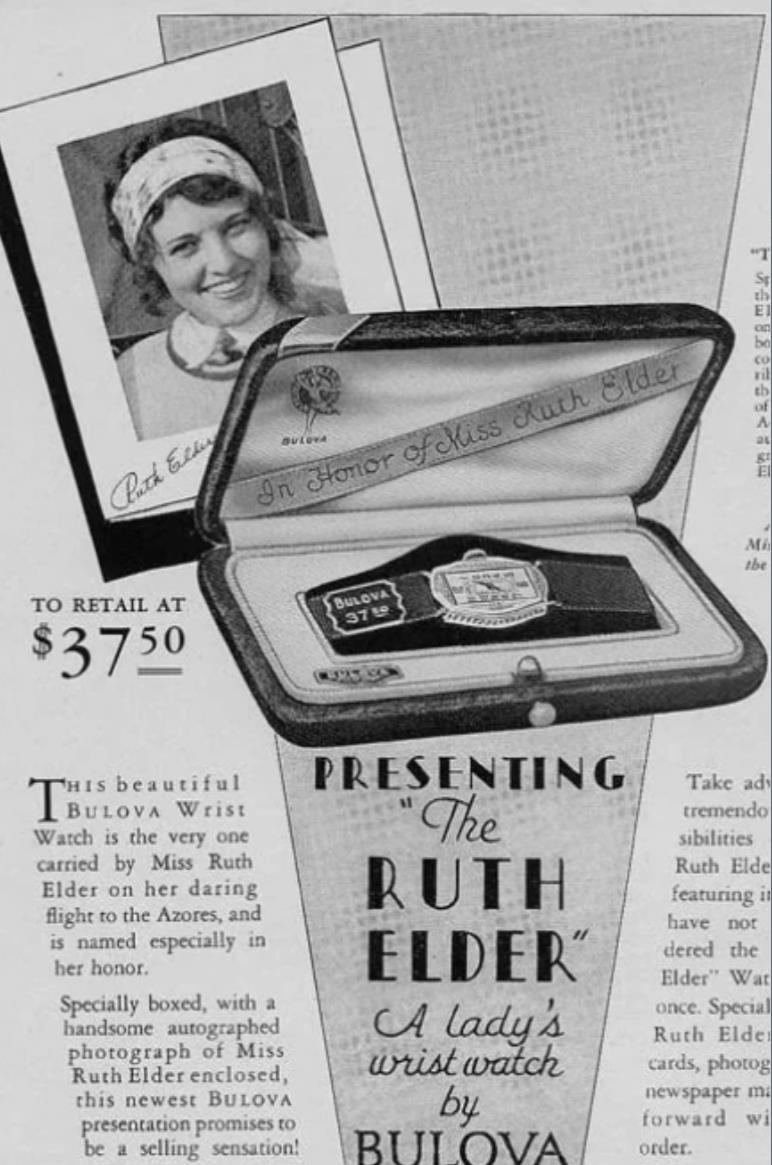
Ruth Elder flew from New York to the Azores, setting a record for female aviators. The watch she wore was later named the "Ruth Elder" in her honor, sold in a gift box with her autographed photograph.
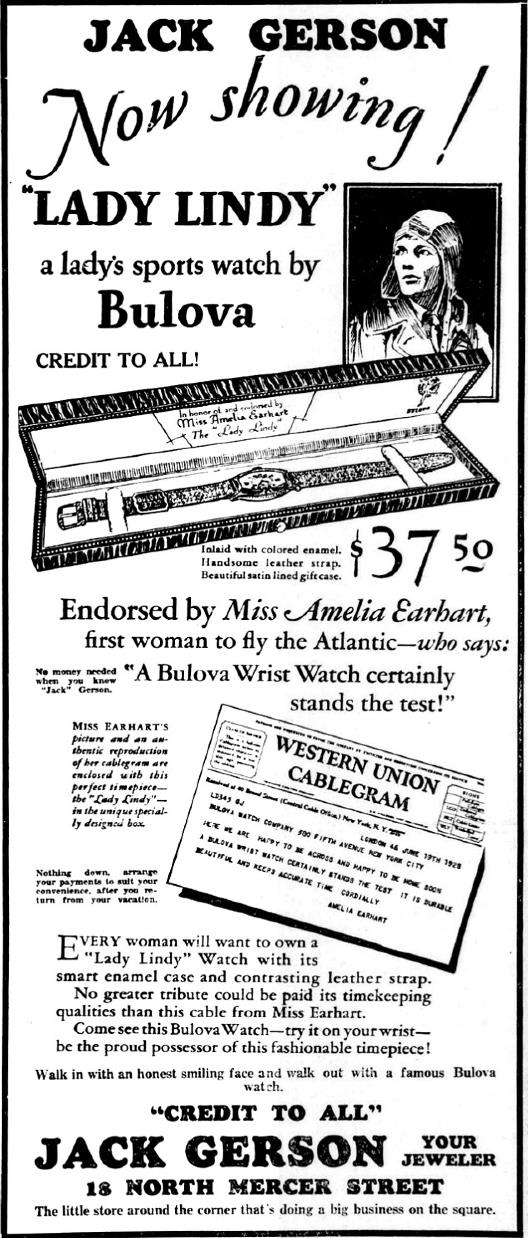
When Amelia Earhart became the first woman to fly trans-Atlantic, she became known as "Lady Lindy." Bulova marketed a watch honoring her feat — endorsed by the aviatrix herself via Western Union cablegram.
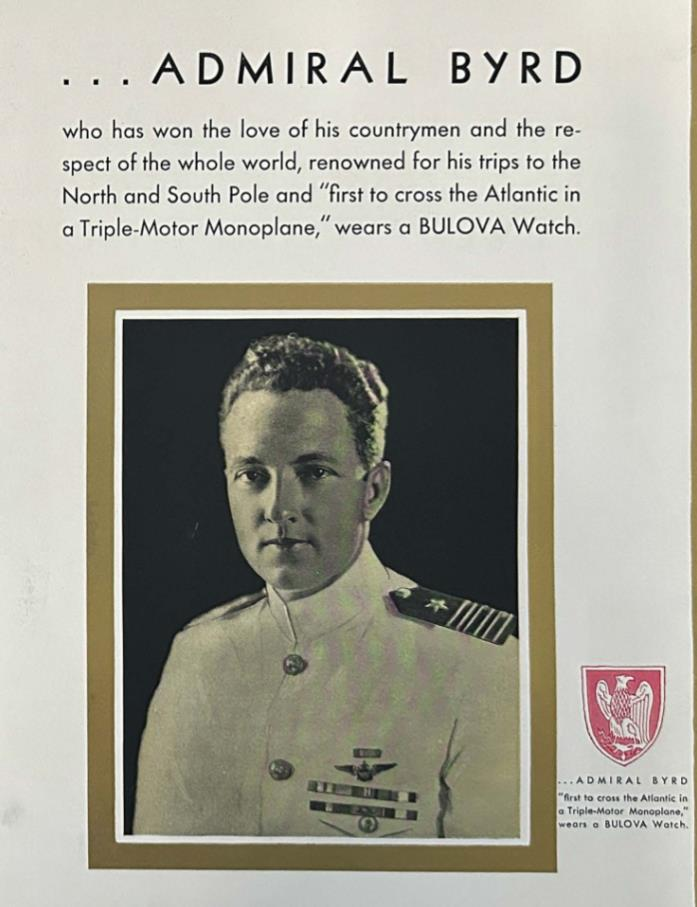
Admiral Richard Byrd — renowned for polar expeditions and the first to cross the Atlantic in a Triple-Motor Monoplane — wore a Bulova watch.
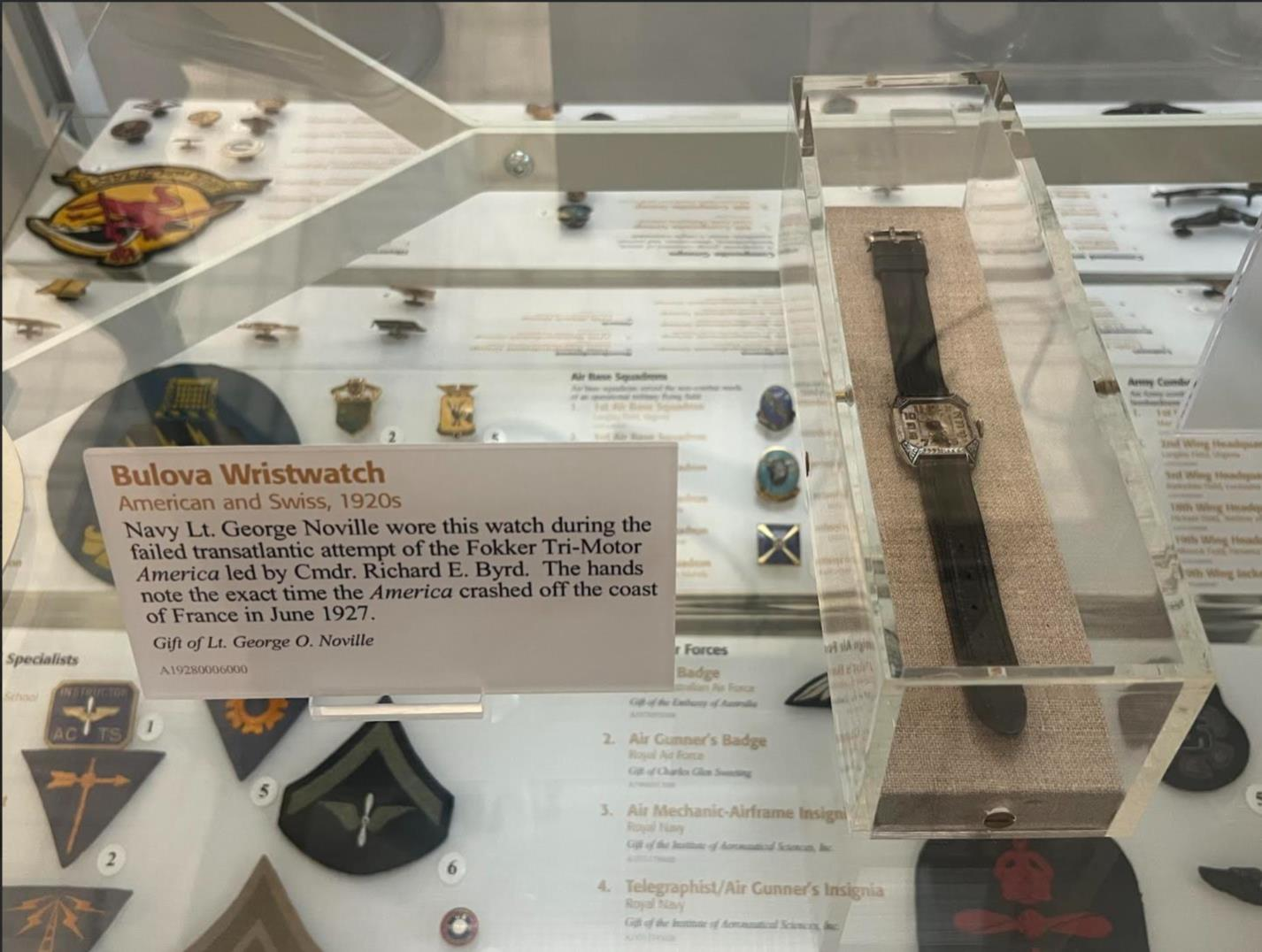
George Norville's Bulova — worn on the Fokker Tri-Motor — is now in a museum. Its hands mark the exact moment the America crashed off the coast of France, frozen in time.
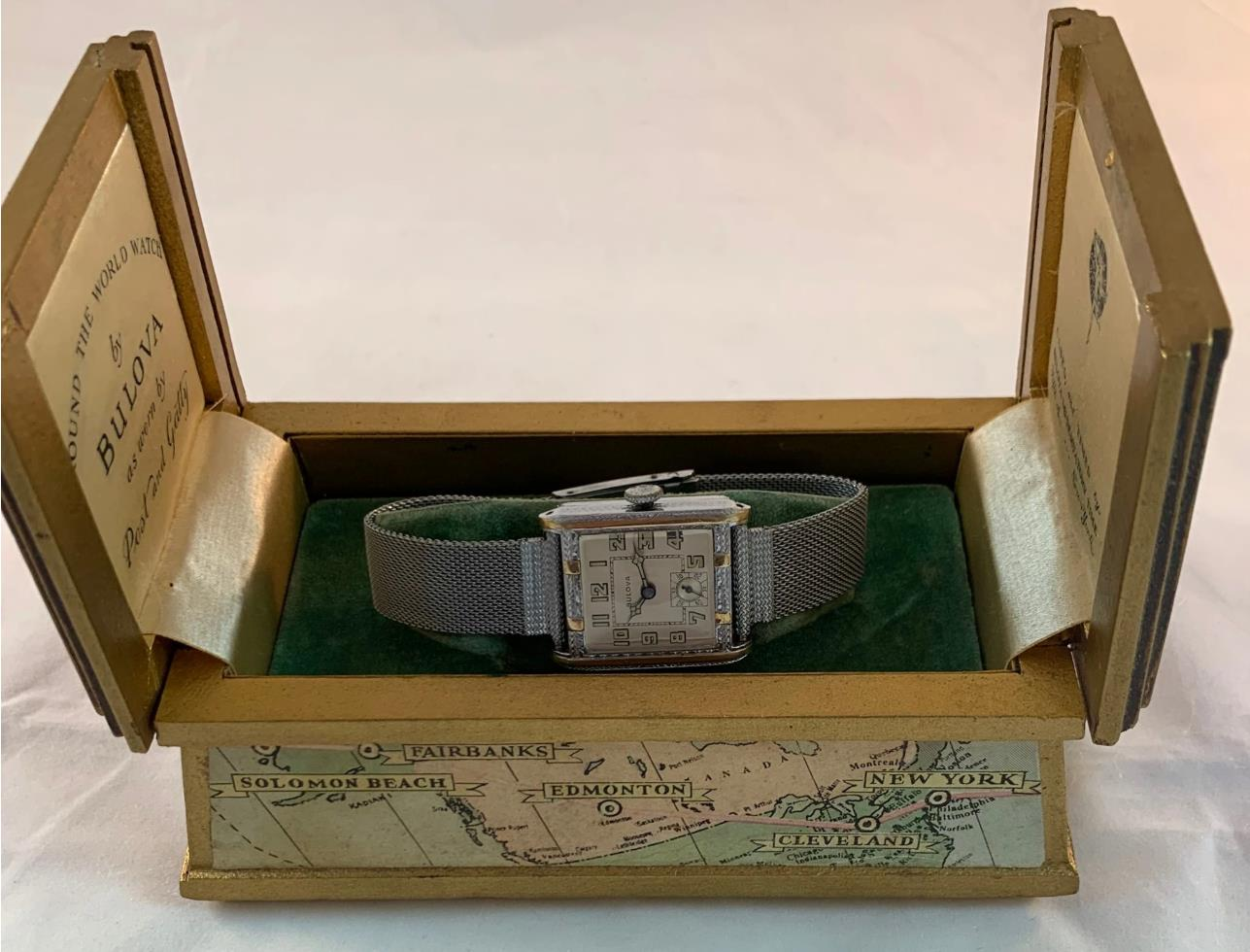
Wiley Post and Harold Gatty wore Bulovas as they became the first pilots to fly around the world. The commemorative watch was sold in a gift box mapping all 14 refueling stops on the voyage.
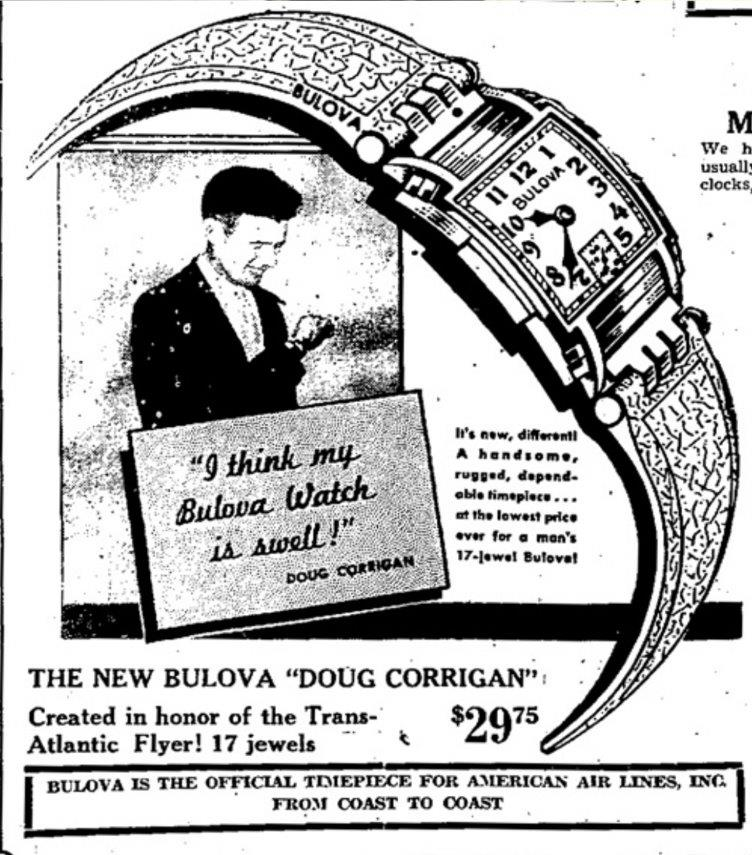
Douglas Corrigan took off from New York claiming a cross-country flight — and landed in Ireland. Bulova immortalized the spectacular "Wrong Way Corrigan" with a watch of the same name. Corrigan himself said: "I think my Bulova Watch is swell!"
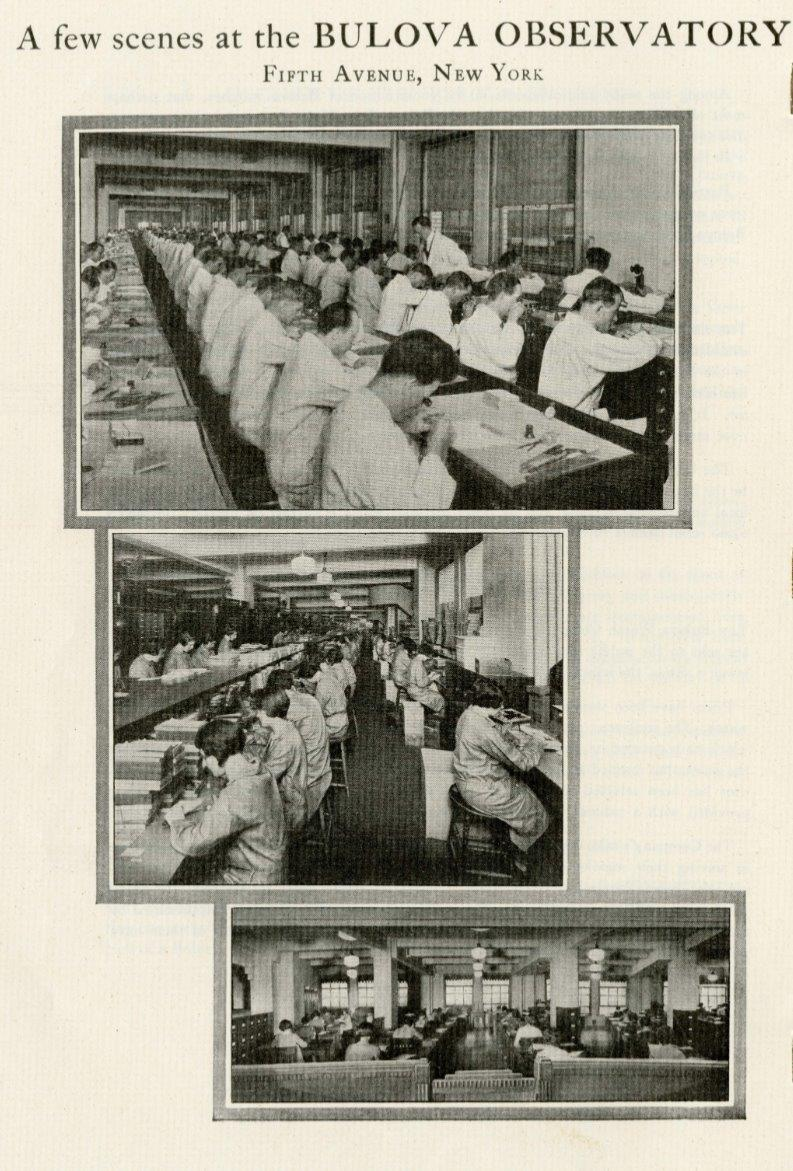
Bulova maintained offices at five different locations on Fifth Avenue. The Observatory at 580 Fifth Ave — where every watch was timed and regulated — became one of New York's most precise addresses.
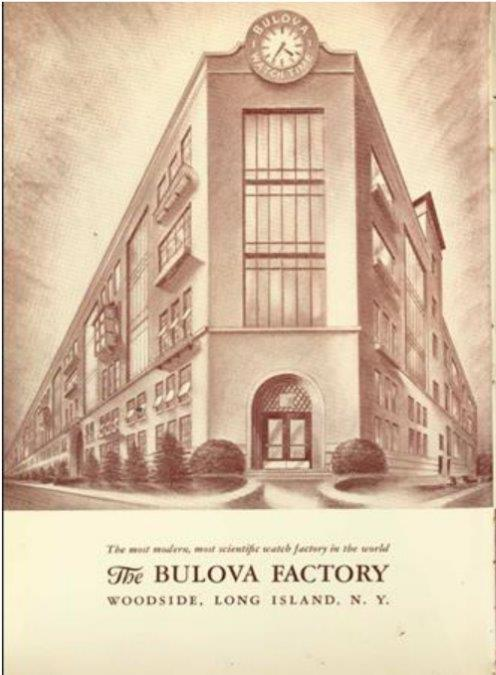
Described as "the most modern, most scientific watch factory in the world" — the Bulova factory in Woodside, Long Island was a marvel of precision manufacturing.
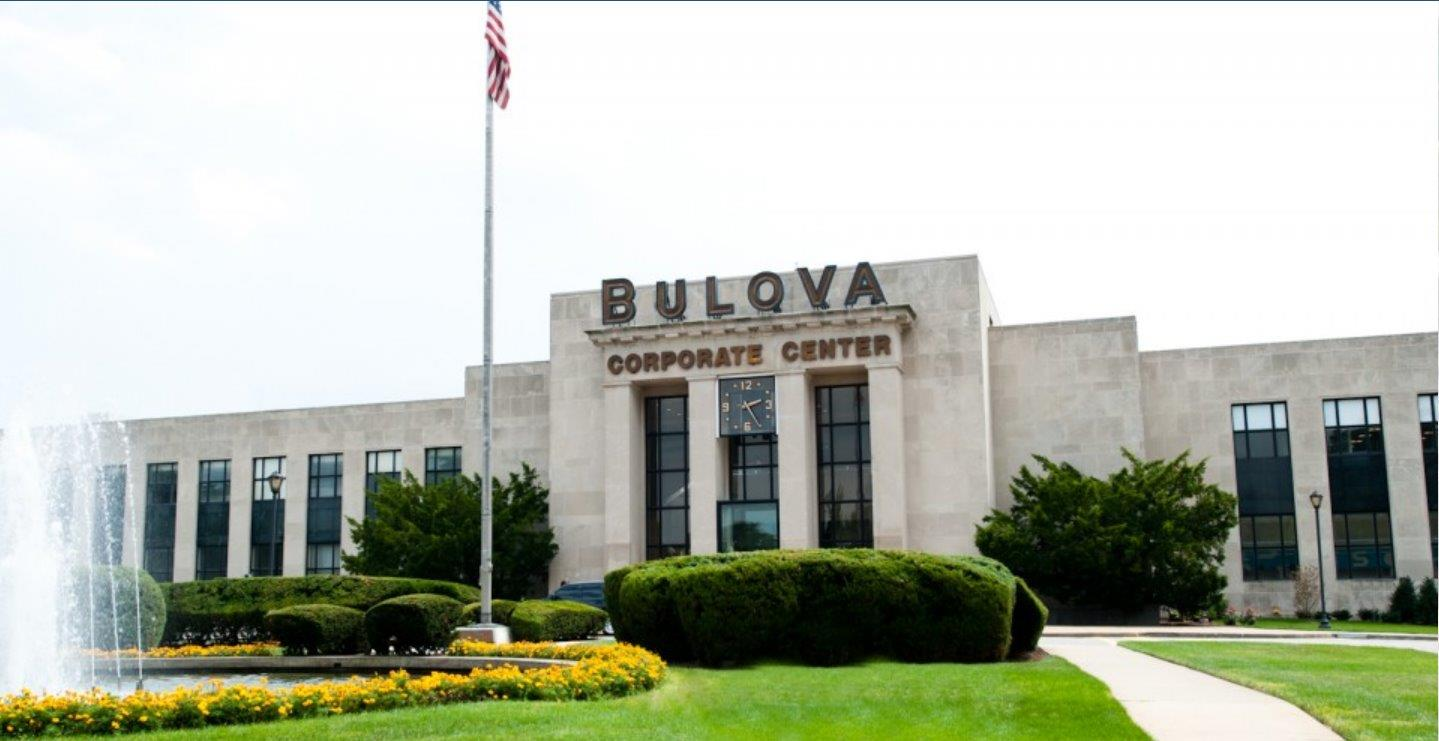
The Bulova Corporate Center was architecturally inspired by the 1937 Federal Reserve Building — a monument to permanence, precision, and the weight of institutional trust.
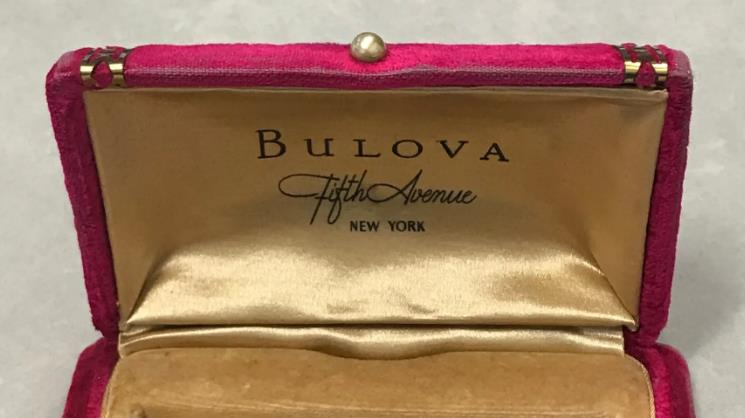
The iconic Bulova Fifth Avenue, New York presentation boxes — luxurious crimson velvet — embodied the brand's aspirations as a gift of enduring elegance.
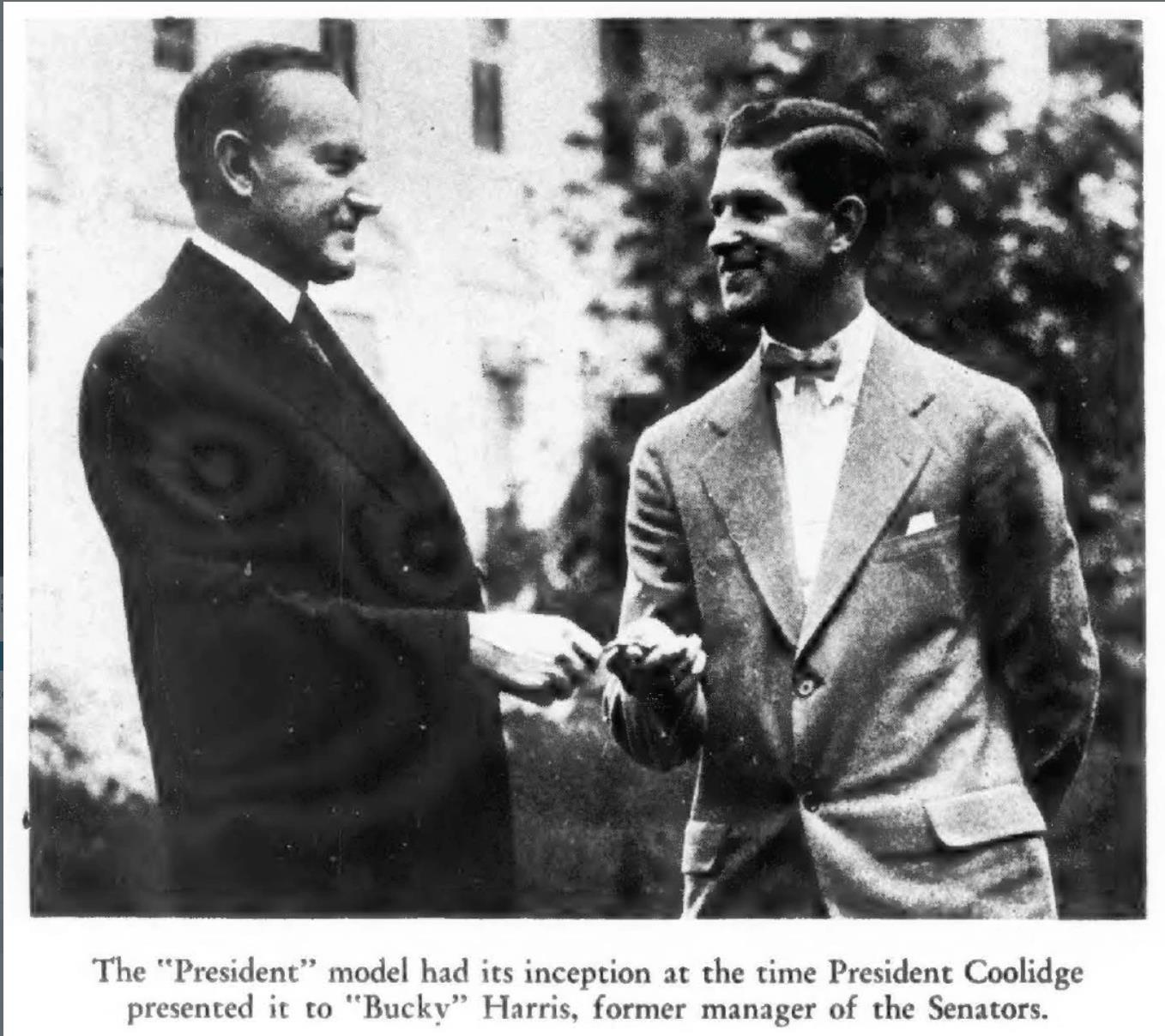
President Calvin Coolidge presented player-manager Bucky Harris with a Bulova. It became known as The President — one of the most celebrated watches in American sports history.
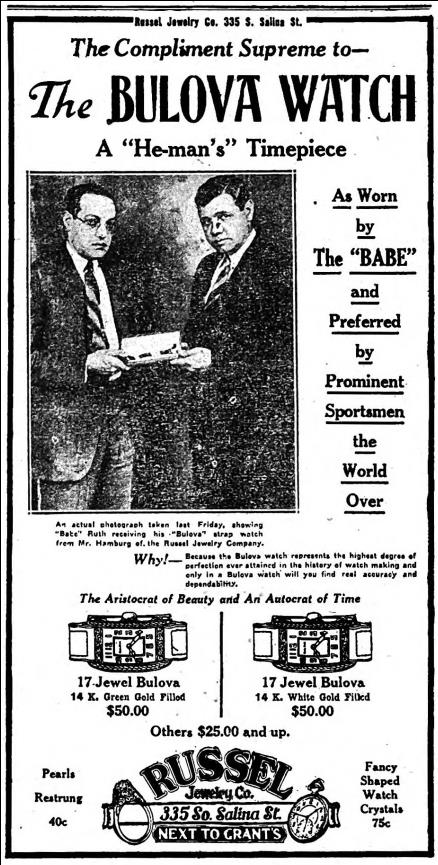
Babe Ruth was personally presented a Bulova watch by a Bulova jeweler. The resulting ad declared it "A He-man's Timepiece — As Worn by The Babe, Preferred by Prominent Sportsmen the World Over."
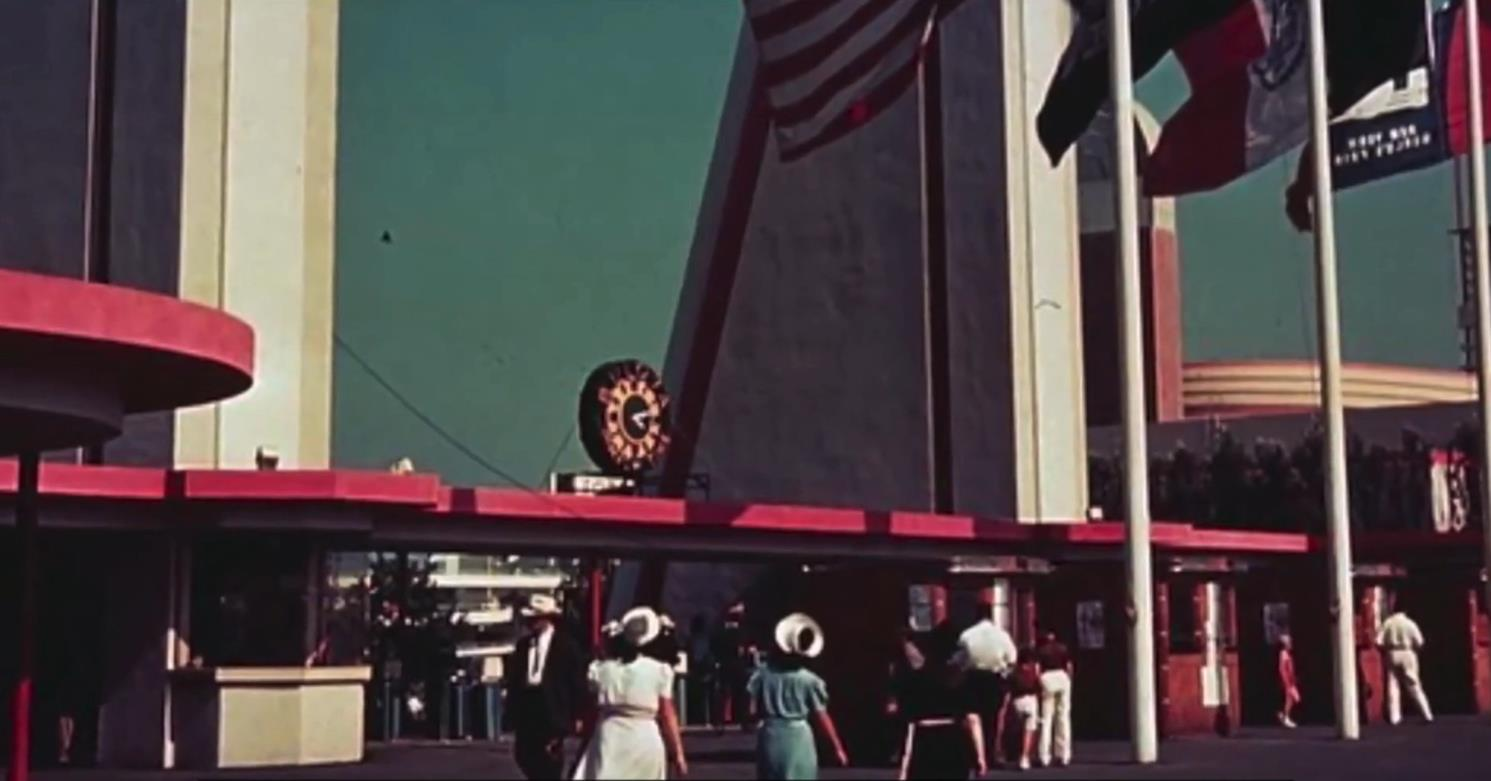
The entrances to the New York World's Fair were adorned with a glowing Bulova neon clock — one of the most visible timepieces in the city's history.
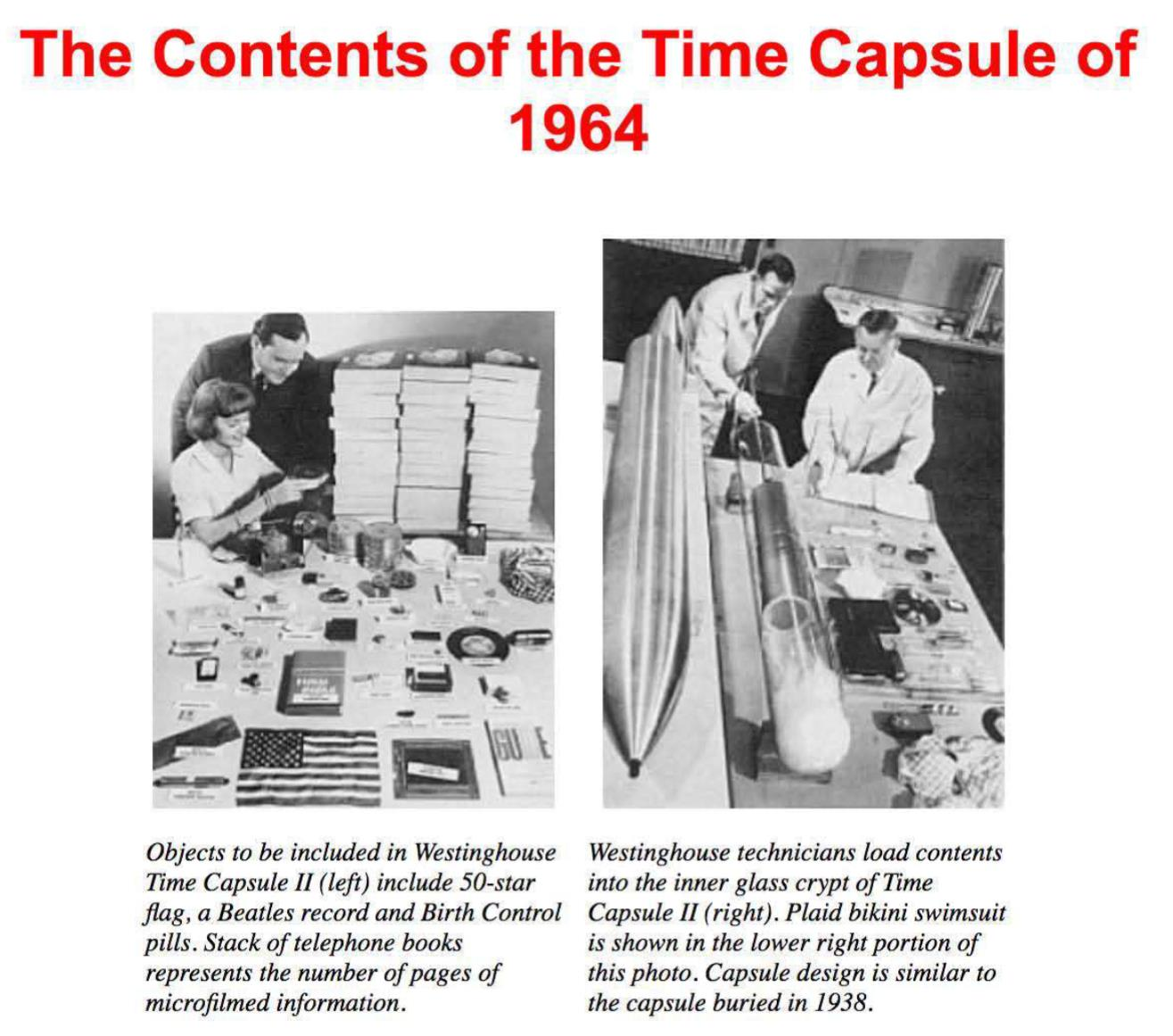
When New York hosted the World's Fair again, a time capsule was buried alongside a Beatles record, birth control pills, and a Polaroid camera — including an Accutron watch.
A 1955 A.C. Nielsen survey found that Americans saw more national advertising for Bulova products than for any other products in any other industry in the world.
A.C. Nielsen Company · 1955Bulova Annual Report · 1955 · "More People See Advertising for Bulova Than for Any Other Advertised Product in the World"
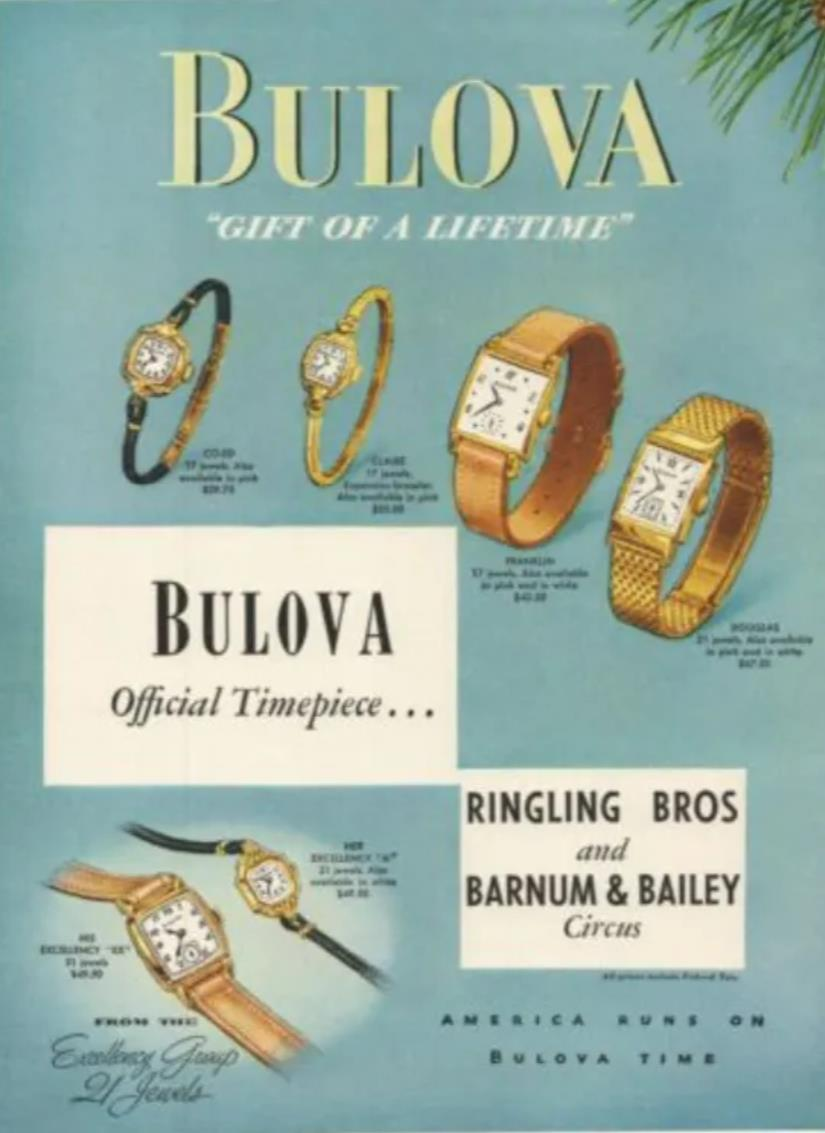
Bulova was the official timepiece of Ringling Bros. and Barnum & Bailey Circus throughout the forties and fifties — "America Runs on Bulova Time."
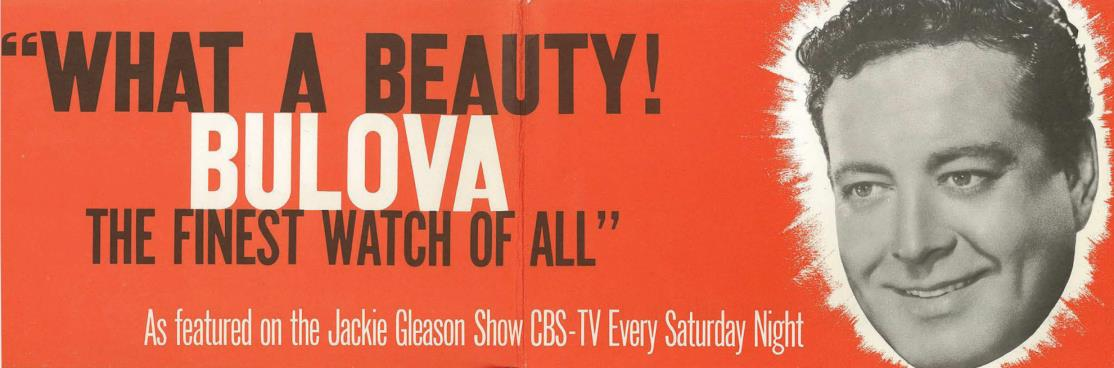
"And Away We Go…" Bulova sponsored the Jackie Gleason Show. Gleason composed and conducted the album Time exclusively for Bulova — a television, music, and commerce intersection unique in the era.
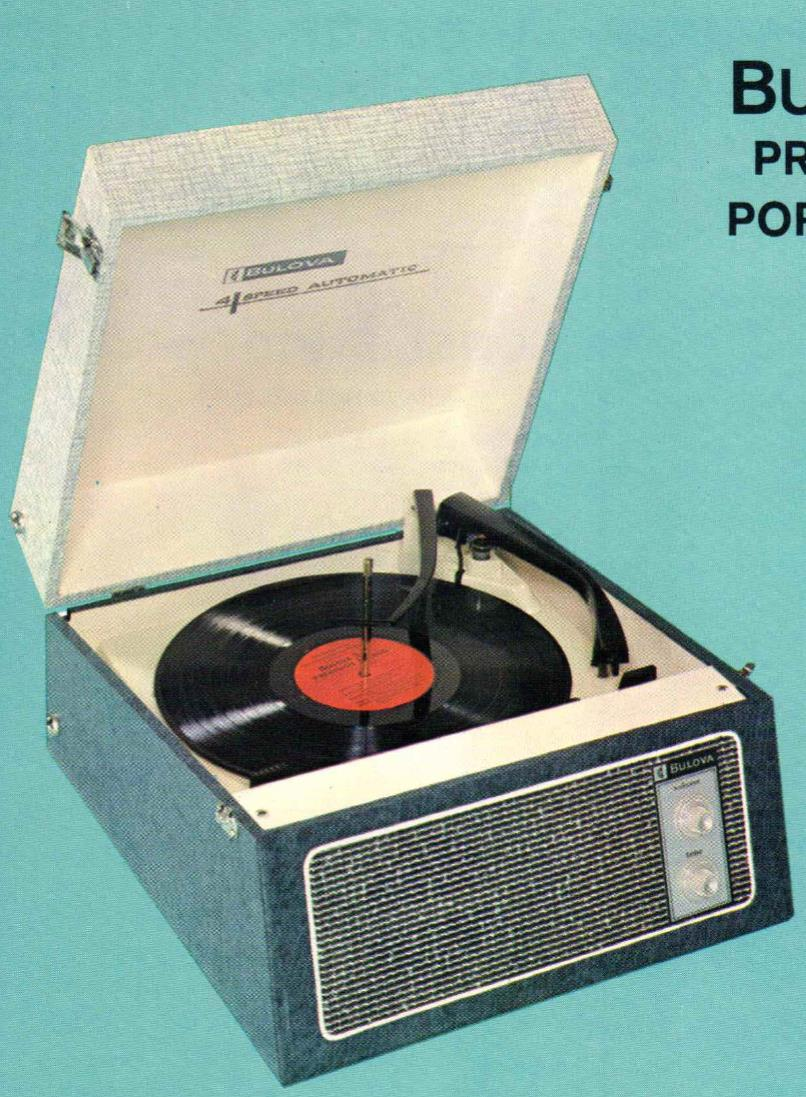
Beyond watches, Bulova manufactured phonographs and ladies' electric shavers — demonstrating the extraordinary breadth of its precision manufacturing ambitions.
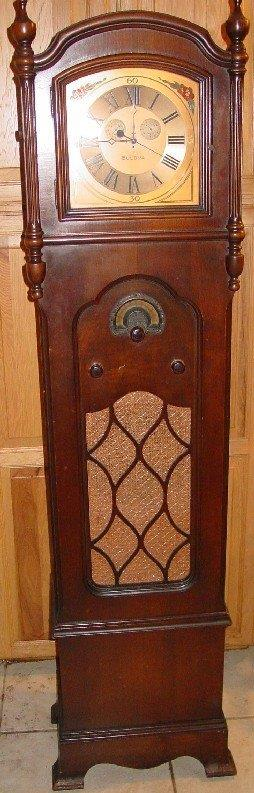
Bulova created the first clock radio — combining a tube-based radio with a clock, with designs crafted to match home décor of the era. It transformed the industry.
Bulova sponsored the Frank Sinatra Show. The relationship continues — Bulova collaborates with the Sinatra estate to this day, honouring a legacy that spans generations.
Television & Prestige Drama
Cinema
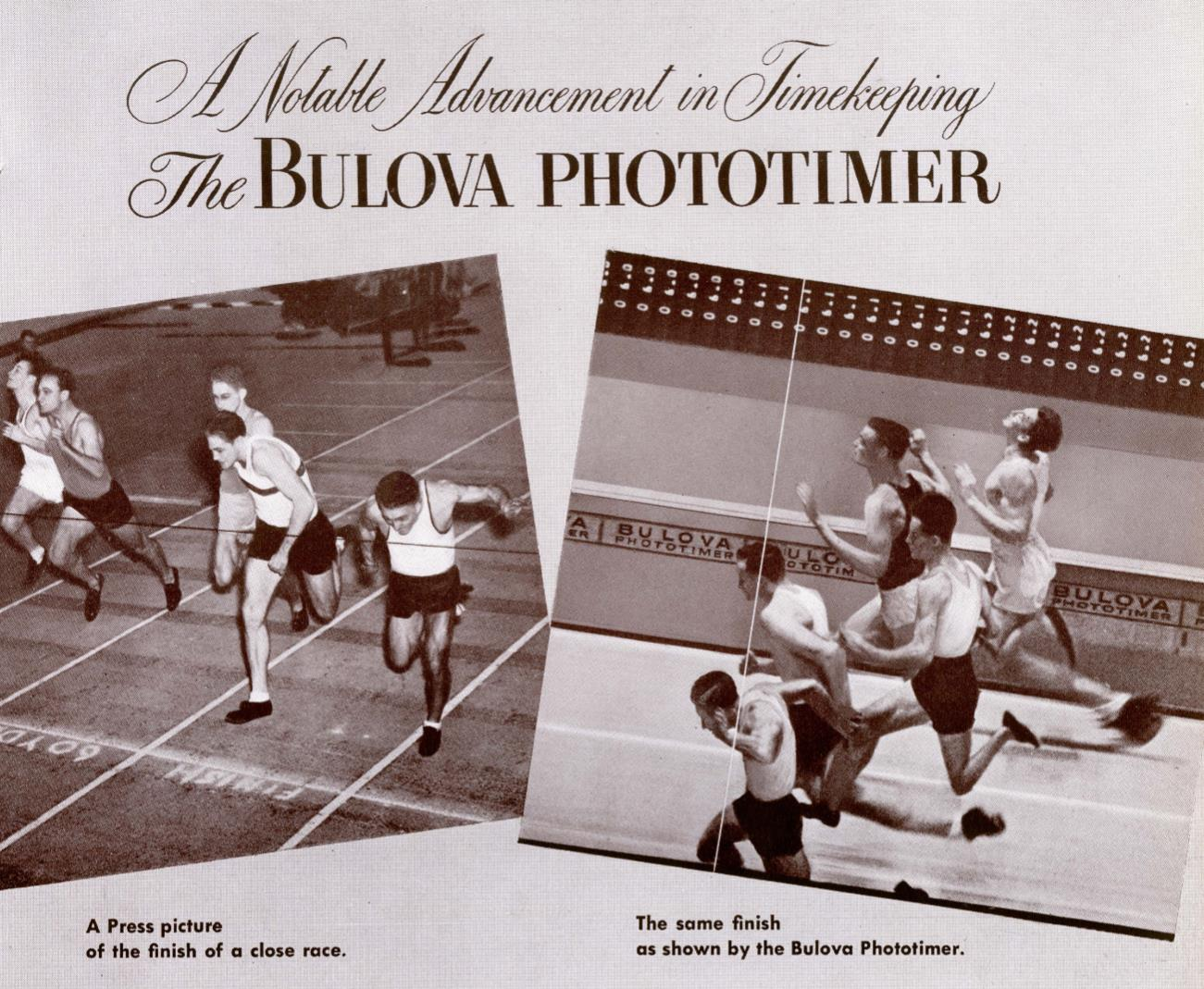
The Bulova Phototimer · "A Notable Advancement in Timekeeping" · Timing Sport to the Fraction of a Second
In the 1960s, Accutron's tuning-fork technology enabled a revolution in documentary filmmaking. Richard Leacock used the Accutron's 365 Hz signal to synchronize cameras with tape recorders — eliminating cables and birthing Direct Cinema.
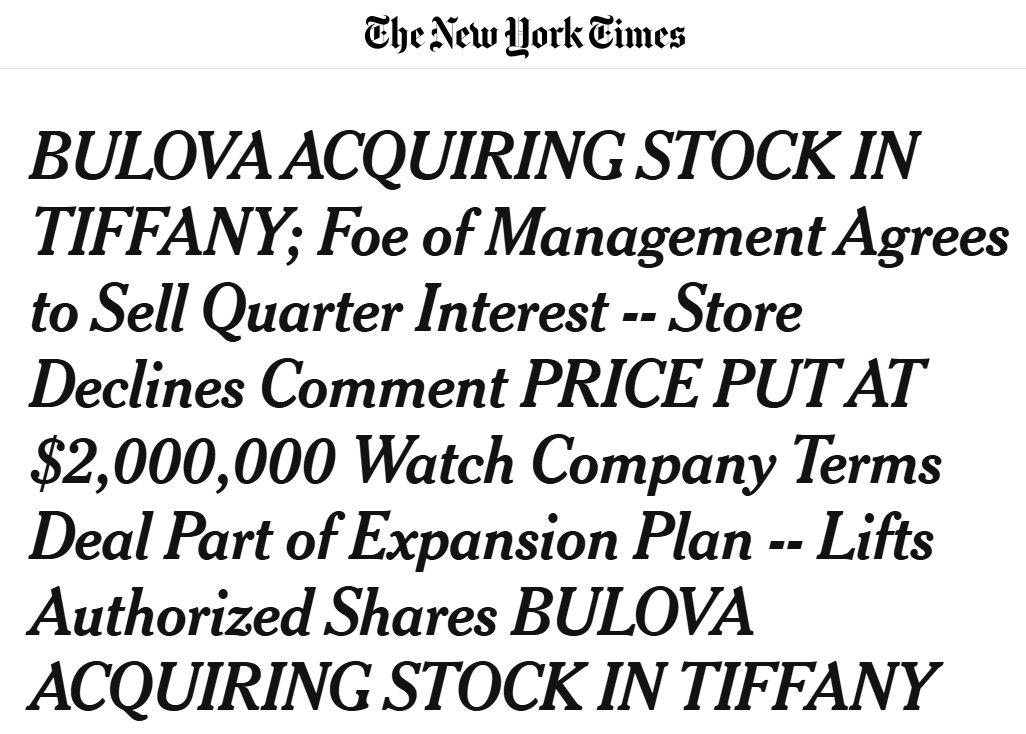
Joseph Bulova had worked for Tiffany in the 1870s. In 1955, his son attempted to acquire Tiffany & Co., owning over 25% of its shares — as reported on the front page of the New York Times. Bulova and Tiffany later co-branded Accutron watches.
Bulova was a critical supplier of precision instruments for national defense — manufacturing mine detectors, missile guidance systems, electronic time fuzes, and the GAIL glide angle indicator for U.S. Army jungle landings.
Bulova manufactured the A-11 specification hack watch — so vital to synchronized military operations that it became known as "the watch that won the war."
The Joseph Bulova School of Watchmaking gave veterans with disabilities a skilled trade — and also sponsored a competitive wheelchair basketball team, one of the earliest adaptive sports programs in America.
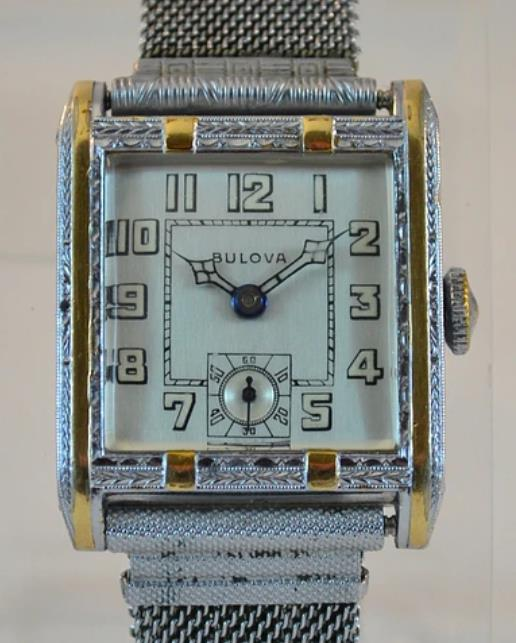
A Century of Design · From Pocket Watches to Precision Instruments